Deep-Roasted Sunflower Seed and Papelón Dessert Conservas
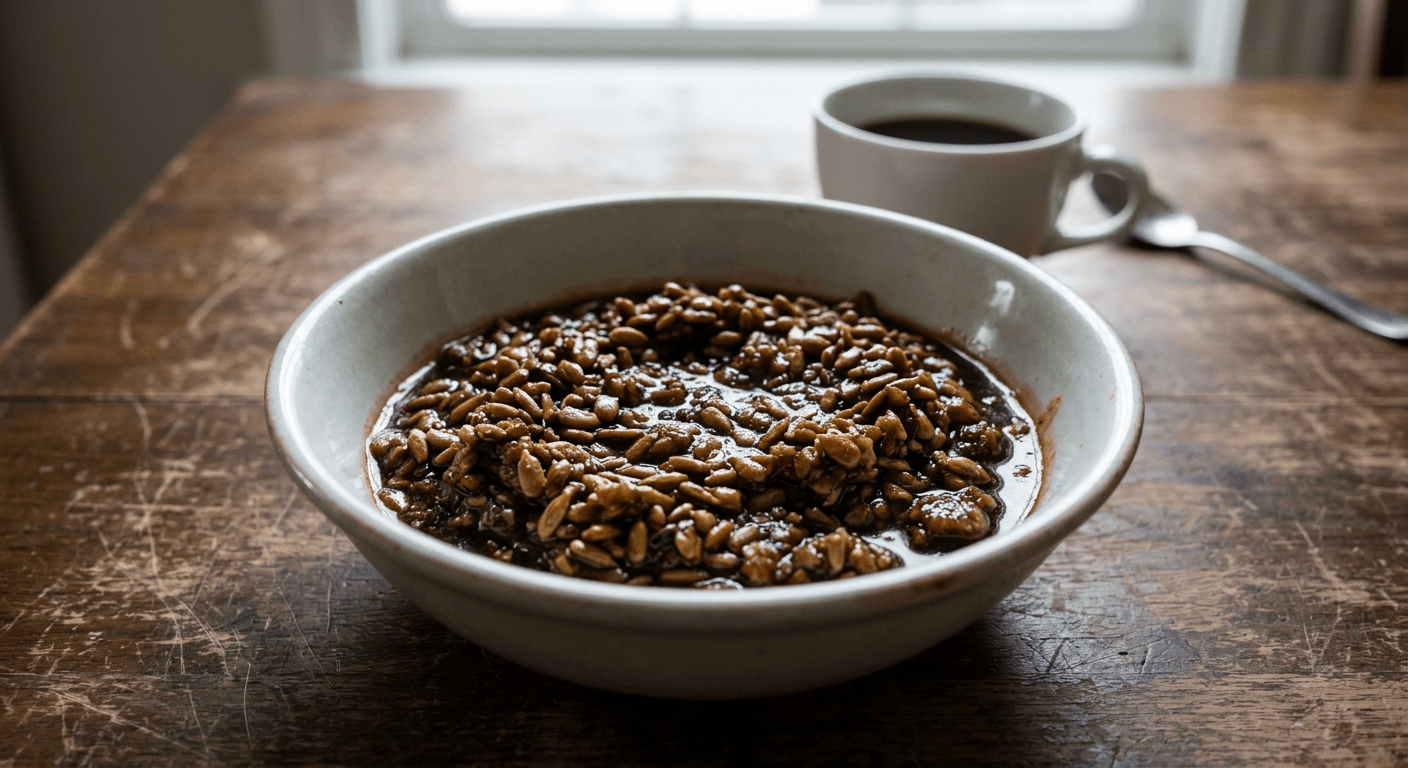
Deep-Roasted Sunflower Seed and Papelón Dessert Conservas
This dessert draws from the Venezuelan tradition of rustically formed conservas, relying on intense, slow roasting to elevate the humble sunflower seed into a dark, crunchy focal point. Venezuelan sweets traditionally balance the brooding molasses notes of papelón (unrefined cane sugar) with sharp, salty cheeses; here, that crucial savory contrast is achieved through an intense, pounded paste of fermented black beans, sweet roasted garlic, and fresh ginger. The high, dry heat of the oven not only toasts the seeds to their absolute limit but mellows the garlic into an earthy aromatic, allowing the complex caramel to bind the aggressively roasted seeds without overshadowing their nutty structural crunch.
Prep time: 20 minutes Cook time: 45 minutes Servings: 8
- Raw, shelled sunflower seeds
- Whole garlic cloves
- Fermented black beans
- Fresh ginger root
- Papelón (unrefined whole cane sugar block)
- Water
- Unsalted butter
- White wine vinegar
- Preheat the oven to a moderate temperature and spread the raw sunflower seeds in an even, single layer on a large, heavy-duty baking sheet.
- Roast the sunflower seeds in the oven, stirring the pan frequently, until they achieve a deep mahogany color and release a pronounced, toasted aroma.
- Enclose the unpeeled whole garlic cloves in a small pouch of foil and roast them alongside the seeds until the cloves are completely softened and caramelized.
- Remove both the seeds and the garlic from the oven, immediately transferring the hot seeds to a cool surface to stop the internal roasting process and prevent bitterness.
- Squeeze the roasted garlic out of its skins onto a heavy cutting board and mash it into a smooth paste with the grated fresh ginger and thoroughly rinsed fermented black beans.
- Combine the chopped papelón and water in a heavy-bottomed saucepan over medium heat, simmering gently until the raw sugar melts into a dark, rolling syrup.
- Whisk the savory bean and roasted garlic paste into the bubbling syrup, cooking the mixture continuously until the liquid reduces and thickens to the soft-ball candy stage.
- Remove the saucepan from the heat and immediately whisk in the unsalted butter and white wine vinegar to halt caramelization.
- Fold the deeply roasted sunflower seeds into the hot caramel mixture with a wooden spoon until every individual seed is heavily coated by the sticky syrup.
- Pour the hot mass onto a sheet of baking parchment, pressing it flat with an oiled spatula into a dense, even tablet to set and cool completely before cracking into rustic dessert shards.
In traditional Venezuelan confectionery, balancing the profound, heavy sweetness of papelón requires a sharp, acidic, or salty counterpoint. The splash of white wine vinegar whisked in at the final moment acts as a crucial brightening agent, cutting directly through the dense sugars, the rich sunflower oils, and the concentrated umami of the black bean paste. Its crisp bite elevates the entire profile, ensuring this dessert functions as a complex, nuanced after-dinner treat rather than a cloying sugar tablet.
The aromatic base represents a shift from dairy-based saltiness (like aged queso llanero) to a plant-based umami foundation, but the flavor logic remains strictly Venezuelan: building tension between dark, raw sugar and savory depth. It is imperative that the fermented black beans are washed vigorously before mashing, which removes their surface brine and leaves behind only their deep, earthy fermentation notes. If a block of authentic papelón is unavailable to you, substituting a very high-quality dark muscovado sugar or piloncillo will provide the necessary molasses backbone this technique demands.