Quick-Fermented Pinto Bean Mash with Toasted Cumin and Herbs
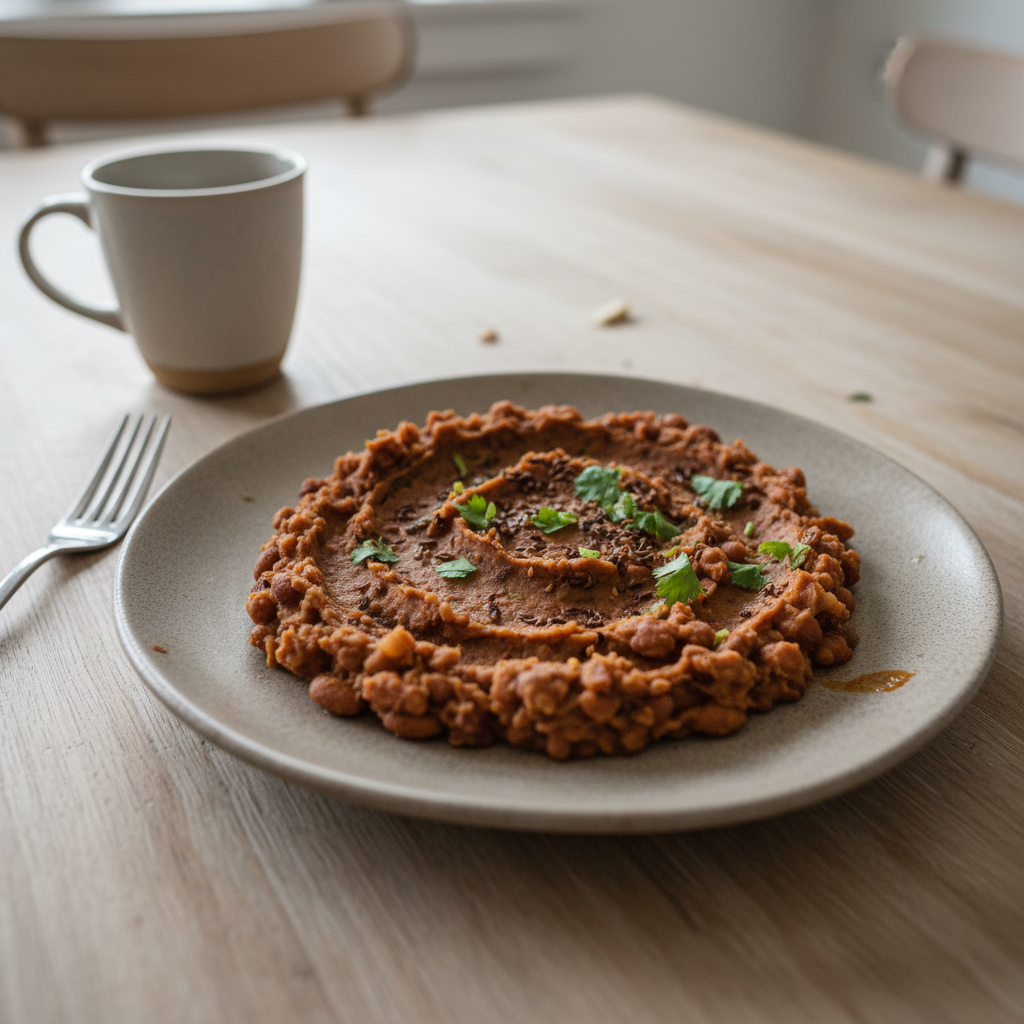
Quick-Fermented Pinto Bean Mash with Toasted Cumin and Herbs
This starter uses a short lacto-fermentation to transform the familiar, creamy pinto bean into something lively and complex. The process introduces a subtle, savory tang that is then grounded by the warmth of toasted cumin, garlic, and turmeric. Rather than merely seasoning the beans, this method builds flavor from within, creating a foundation for the brightness of fresh mint and parsley. It's a testament to how an elemental technique can elevate a simple legume into a composed dish.
Prep time: 15 minutes active, plus 24–48 hours for fermentation Cook time: 5 minutes Servings: 4 starter portions
Ingredients
- Canned or cooked pinto beans, rinsed and drained
- Non-iodized sea salt
- De-chlorinated water
- Fresh garlic
- Whole cumin seeds
- Ground turmeric
- A large handful of fresh flat-leaf parsley
- A small handful of fresh mint
- High-quality extra virgin olive oil
- Pomegranate molasses
- Warm flatbread or crisp crackers, for serving
Instructions
- Place the rinsed pinto beans in a clean glass jar, filling it about two-thirds full.
- Create a brine by dissolving the salt in the de-chlorinated water, then pour it over the beans to cover them completely.
- Loosely cover the jar and leave it on the counter at room temperature for 24 to 48 hours, until the brine is slightly cloudy and smells pleasantly sour.
- Drain the fermented beans thoroughly, reserving a tablespoon of the brine.
- Toast the whole cumin seeds in a small, dry skillet over medium heat for one minute until fragrant.
- In a bowl, combine the drained beans with the toasted cumin seeds, grated garlic, ground turmeric, and the reserved tablespoon of brine.
- Gently mash the bean mixture with a fork, leaving some beans partially intact for texture.
- Finely chop the parsley and mint leaves, then fold most of them into the bean mash.
- Spoon the mash onto small plates, making a shallow well in the center.
- Drizzle generously with extra virgin olive oil and a thin stream of pomegranate molasses.
- Garnish with the remaining fresh herbs and serve immediately with warm flatbread.
Notes
For successful fermentation, it is crucial to use non-iodized salt and de-chlorinated water (either filtered or tap water that has been left out for several hours), as chlorine and iodine can inhibit the beneficial bacteria. The goal of this quick fermentation is not long-term preservation but flavor development; you are looking for a light tang, not a sharp acidity.
The final drizzle of pomegranate molasses is not merely a garnish; its concentrated sweet-tart flavor provides essential acidic balance to the earthy, fermented beans and rich olive oil. If you do not have it, a very light squeeze of fresh lemon juice can work, but the molasses adds a unique depth. This starter pairs well with a simple plate of sliced radishes and cucumbers to offer a cool, crisp counterpoint.